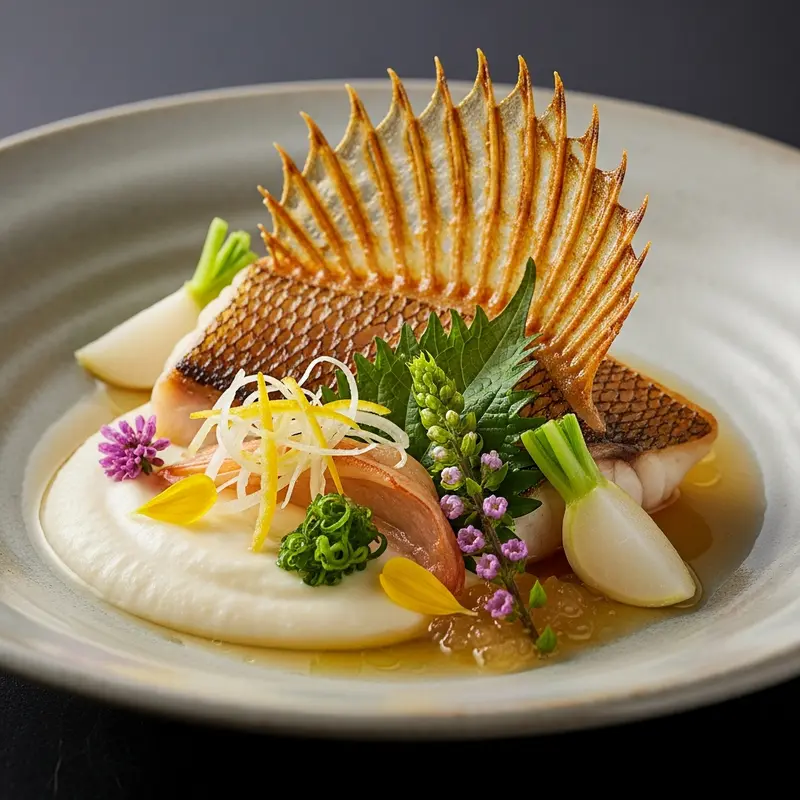
Amadai Matsukasa Sakamushi: Golden Tilefish with Crispy Scales, Silken Turnip Puree, and Yuzu-Dashi Nectar
Embark on a culinary journey to the serene shores of Japan with this exquisite Amadai Matsukasa Sakamushi. This dish celebrates the delicate elegance of tilefish, renowned for its tender, flaky flesh and unique ability to crisp its scales to a golden perfection. The fish is gently steamed with sake, preserving its pristine flavor, while the "matsukasa" technique transforms its skin into an irresistibly delicate crunch. It rests upon a cloud-like silken puree of seasonal Japanese turnips, offering a subtle sweetness and velvety texture. A luminous yuzu-infused dashi nectar, subtly thickened, envelops the ensemble, harmonizing the oceanic notes of the fish with the earthy sweetness of the turnip and the bright, aromatic zest of yuzu. Each bite is a symphony of textures and refined flavors, a testament to the understated artistry of Japanese cuisine.
Gourmet Ingredients
Check ingredients off as you assemble them.
- Amadai (Tilefish) fillets, skin on2 (approx. 180-200g each)
- Japanese Turnips (Kabura)2 medium (approx. 300g total)
- Water3 cups (720ml) for dashi
- Kombu (dried kelp)10 g
- Katsuobushi (bonito flakes)15 g
- Sake (cooking sake)90 ml, divided (60ml for steaming, 30ml for sauce)
- Mirin (sweet cooking rice wine)2 tbsp (30ml)
- Usukuchi Shoyu (light soy sauce)2 tbsp (30ml)
- Yuzu juice (freshly squeezed)1 tsp (5ml)
- Katakuriko (potato starch)1 tbsp (10g)
- Water for starch slurry2 tbsp (30ml)
- Fresh Ginger1 small piece (approx. 10g), julienned
- Mitsuba (Japanese parsley) or Chives2 sprigs, finely chopped, for garnish
- Salt0.5 tsp, plus extra for seasoning fish
Method of Preparation
Follow these step-by-step instructions carefully.
- 1Step 1
Prepare the Amadai: If using a whole fish, carefully scale it, ensuring the scales on the skin side of the fillets remain intact for the 'matsukasa' effect. Fillet the fish, leaving the skin on. Pat the fillets thoroughly dry with paper towels. Score the skin side of each fillet diagonally a few times to encourage crisping. Season lightly with salt.
- 2Step 2
Prepare the Dashi: In a medium pot, combine 3 cups (720ml) water and the kombu. Heat gently over medium-low heat until just before boiling (around 80-85°C). Remove the kombu. Bring the water to a full boil, then turn off the heat and add the katsuobushi. Let it steep for 30 seconds, then strain the dashi through a fine-mesh sieve, pressing gently on the katsuobushi to extract all liquid. You should have approximately 2.5 cups (600ml) of dashi.
- 3Step 3
Prepare the Turnip Puree: Peel both Japanese turnips. Cut one turnip into small cubes and steam until very tender (about 10-15 minutes). Mash or blend until smooth, adding a tiny pinch of salt. For the second turnip, grate it finely and gently squeeze out any excess water to create a delicate 'turnip cloud' texture.
- 4Step 4
Steam the Amadai: Place the Amadai fillets skin-side up on a heatproof plate that fits into your steamer. Pour 60ml of sake over the fish. Steam for 8-10 minutes, or until the fish is cooked through and flaky, and the scales have stood up and crisped slightly.
- 5Step 5
Make the Yuzu-Dashi Nectar: In a small saucepan, combine 1.5 cups (360ml) of the prepared dashi, 30ml sake, 30ml mirin, and 30ml usukuchi shoyu. Bring the mixture to a gentle simmer over medium heat.
- 6Step 6
Thicken the Nectar: In a small bowl, whisk together 1 tbsp (10g) katakuriko with 2 tbsp (30ml) cold water to create a smooth slurry. Slowly whisk the slurry into the simmering dashi mixture until it thickens to a light, glossy consistency. Stir in the 1 tsp (5ml) of freshly squeezed yuzu juice.
- 7Step 7
Assemble the Dish: On each serving plate, spoon a generous portion of the silken turnip puree. Carefully place a steamed Amadai fillet on top, ensuring the crispy skin faces upwards.
- 8Step 8
Garnish and Serve: Ladle the warm yuzu-dashi nectar generously over and around the fish and turnip. Garnish with julienned fresh ginger and finely chopped mitsuba or chives. Serve immediately to enjoy the textures and aromas at their best.
Chef's Notebook
Your personal cooking adjustments and annotations, saved to this browser.
Recipe Details
Cost Indicator
Standard ingredient budget. Perfect for weekend family dinners.